
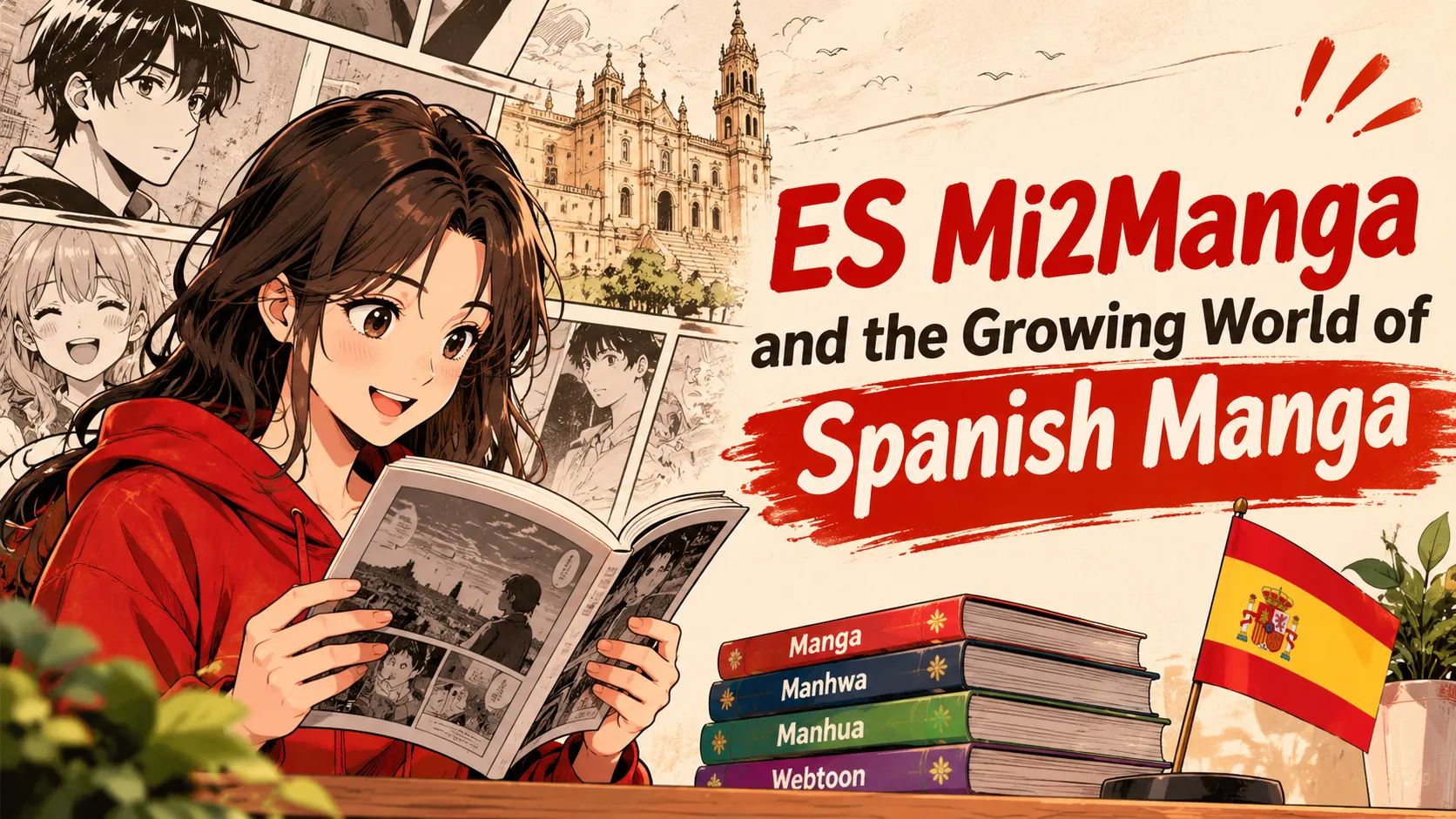
ES Mi2Manga is a Spanish-language online comic platform associated with Japanese manga, Korean manhwa, and translated digital stories. Its previously indexed catalog reflects a growing interest in Asian comics among readers who prefer to enjoy these stories in Spanish.
While international anime releases have become increasingly accessible, finding translated comic chapters can still be challenging. Websites associated with Mi2Manga have attracted attention by offering a place where readers can discover unfamiliar series, explore different genres, and find Spanish titles for internationally published comics.
However, the platform’s accessibility, publishing permissions, and long-term reliability are less straightforward.
How ES Mi2Manga Fits Into International Comic Culture
Manga was once something many international readers discovered through imported books, specialist bookstores, or television adaptations. Smartphones and digital publishing have changed that experience considerably.
Readers can now discover illustrated stories from Japan and South Korea without waiting for physical editions to reach their local bookstores.
ES Mi2Manga is associated with this wider shift toward digital comic consumption. Its indexed website, es.mi2manga.com, displays Lectormanga branding and contains listings aimed at Spanish-speaking audiences.
The website has been associated with several storytelling categories, including fantasy, romance, adventure, drama, and mature comics.
For readers unfamiliar with the service, this background guide to ES Mi2Manga provides additional information about its online identity, catalog, and publishing uncertainties.
Why Spanish Translations Make Such a Difference
Reading a comic in another language involves more than understanding its dialogue. Humor, cultural references, emotional exchanges, and character relationships can become difficult to follow when the reader is unfamiliar with the language.
Spanish translations allow a wider audience to appreciate these details without constantly consulting a dictionary.
This matters particularly in stories where characters’ personalities develop through conversations rather than action alone. A poorly understood exchange between two characters can change how a reader interprets an entire chapter.
There is also the question of accessibility. Readers living in Spanish-speaking countries may not have access to the same translated editions available in Japan, South Korea, or English-speaking markets.
Digital platforms help address this demand, although the availability of a translation does not establish that its publication has been authorized.
The Stories Behind the Different Comic Formats
People often use the word manga to describe almost any Asian comic. In reality, the international digital comic market contains several distinct traditions.
Japanese manga frequently uses black-and-white illustrations and carefully arranged page panels. Action sequences, facial expressions, and visual pacing contribute heavily to its storytelling.
Korean manhwa includes both traditional printed comics and modern digital publications. Many contemporary Korean webcomics feature full-color artwork designed for continuous scrolling.
Chinese manhua encompasses another broad collection of illustrated storytelling traditions. Fantasy, historical adventures, mythology, and martial arts are common themes, although the medium extends well beyond these categories.
The term webtoon describes a digital publishing format rather than a single genre. Webtoons are generally designed for convenient reading on mobile devices, with artwork arranged vertically.
These different formats explain why a reader browsing an online comic catalog might encounter several visual styles within the same genre.
What Readers Can Learn From a Comic Listing
One useful aspect of digital comic catalogs is the information surrounding each story.
An individual series listing can help a reader identify a title, understand its premise, and decide whether it deserves their attention.
Previously indexed Mi2Manga pages displayed information such as alternative titles, creator details, publication status, and chapter references.
These details can be especially helpful when searching for translated comics. A story might have a Spanish title that differs considerably from its English or Korean name.
Matching the creator’s name, cover artwork, and original title is often more reliable than searching by a translated title alone.
For example, two unrelated romance comics might have similar Spanish names. Comparing their descriptions and authors can prevent readers from confusing them.
The Orbit News overview of Mi2Manga’s reading features discusses how these series pages and catalog categories are organized.
Also Read: MegaZee.com: The Story Behind a Two-Decade-Old Domain
From Printed Pages to Smartphone Screens
The popularity of digital comics is closely connected to the changing way people consume entertainment.
A traditional manga volume requires readers to turn pages and follow a particular panel sequence. A vertically formatted webcomic creates a different experience.
Artists can use long spaces between illustrations to build tension. A character’s dramatic entrance might appear only after the reader scrolls beyond several smaller panels.
This technique is particularly effective in suspense, romance, and fantasy stories.
Digital publishing also makes it easier for readers to follow multiple series without carrying physical books. Someone might read a short episode during a lunch break and continue another story later in the evening.
However, readers should distinguish between the advantages of digital comics generally and features that have actually been verified on a particular platform.
Mi2Manga’s current reading interface could not be fully examined because its website returned a server error during a November 24, 2026, access check.
The Importance of Translation Quality
Not every Spanish translation delivers the same reading experience.
Professional comic localization involves understanding the original dialogue, adapting cultural expressions, maintaining consistent character names, and fitting translated text into existing artwork.
Spanish also varies across different regions. Expressions that sound natural in Spain may be less familiar to readers in Mexico or Argentina.
A translation that closely follows the original words is not necessarily the easiest to understand. Good localization balances accuracy with natural dialogue.
Readers should pay attention to whether character names remain consistent, conversations make sense, and important plot details are preserved.
Official editions are generally a more transparent option because readers can identify the publisher and, in many cases, the translation credits.
Understanding the Limits of Unofficial Comic Platforms
A website can contain extensive information about comics without having permission to distribute those works.
Mi2Manga’s ownership and licensing arrangements are not sufficiently documented to establish that its entire catalog is officially authorized.
That uncertainty matters because manga production involves more than the person drawing the illustrations. Writers, assistants, editors, publishers, translators, and other professionals contribute to bringing these stories to readers.
Licensed publishing platforms provide a clearer connection between the audience and the people responsible for producing the work.
For more general coverage of online platforms and digital services, Trustify News also publishes articles examining website transparency and technology-related topics.
Where Spanish-Speaking Readers Can Find Official Comics
Readers interested in authorized publications have several established options.
MANGA Plus by SHUEISHA is an official service from Japanese publisher Shueisha. It provides selected comics in Spanish and other languages, with chapter availability depending on the individual series and region.
WEBTOON en Español offers digital comics across genres such as romance, fantasy, comedy, action, and horror. Its format is particularly well suited to smartphone reading.
Neither platform carries every international comic. Readers searching for a specific title should identify its original publisher and check which company holds the Spanish-language distribution rights.
Physical editions also remain valuable, particularly for completed series and readers who want to build a permanent collection.
What the Future Holds for Spanish Manga Readers
The continued development of digital publishing gives Spanish-speaking audiences more opportunities to discover international stories.
The challenge is not simply making more comics available. It is making them accessible through dependable services, understandable translations, reasonable pricing, and publishing arrangements that support creators.
ES Mi2Manga illustrates the appeal of bringing translated comics together in one place. Nevertheless, its current availability and licensing remain uncertain.
For readers, the most useful approach is to enjoy the variety of international comic culture while choosing reading services that are transparent about their content and operations.
