

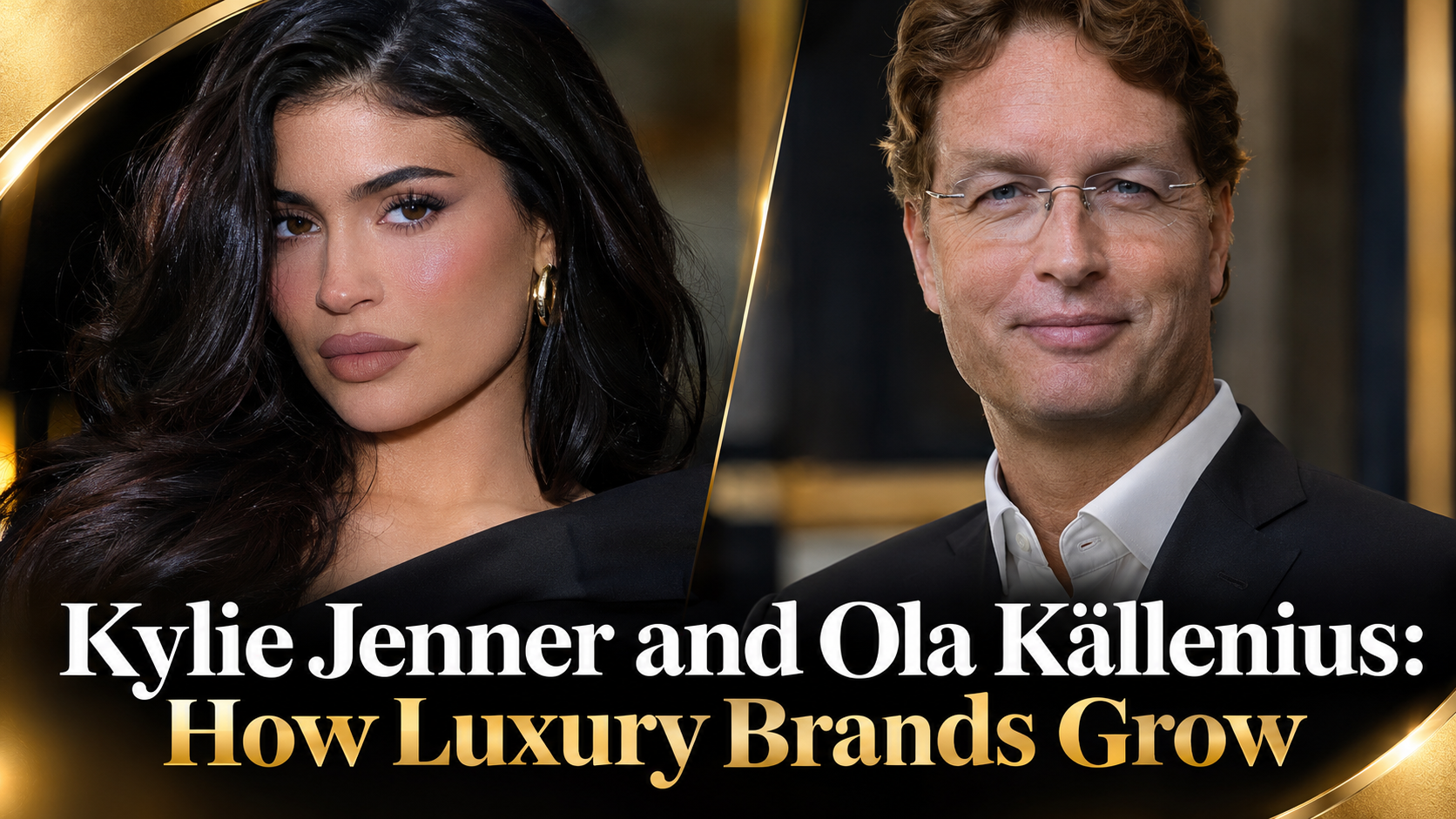
Kylie Jenner and Ola Källenius illustrate two different ways of building a luxury business: one centres on a founder’s public identity, while the other involves leading a long-established automotive group. Jenner is associated with beauty entrepreneurship and entertainment; Källenius leads Mercedes-Benz Group. Their names appearing together does not establish a partnership or personal relationship.
The comparison becomes useful when it focuses on ownership, customer expectations and the work behind a premium brand. Cosmetics and cars have very different production systems, prices and purchase cycles. Yet both depend on persuading customers that a product offers something distinctive, then delivering an experience that supports that promise after the advertising ends.
Kylie Jenner and Ola Källenius: the essential distinction
Jenner’s public profile is closely connected to the identity of her beauty brands. Källenius occupies a corporate leadership position within a company whose history and identity predate his tenure. Calling both people business figures is accurate, but treating their roles as equivalent would obscure how authority and financial exposure actually work.
A founder can contribute an audience, creative direction and an ownership stake. A public-company chief executive works within a governance system that includes a supervisory board, shareholders and reporting obligations. Neither description tells us everything about a person’s influence. It does, however, identify the right questions to ask before comparing earnings, decisions or commercial success.
What the Coty transaction tells us about Jenner’s business
In its announcement of the Kylie Jenner partnership, Coty described an agreement to acquire a 51% interest for $600 million. The announcement also described Jenner and her team’s continuing role in creative work and communications. Those are concrete transaction terms and a stated division of responsibilities, rather than a general claim that celebrity alone creates business value.
The distinction between a transaction and personal wealth matters. The price paid for a stake belongs to a specific agreement at a specific time. It does not provide a complete balance sheet for every participant, and it does not guarantee what the business is worth later. Tax, ownership arrangements, liabilities and subsequent changes would all matter to a net-worth calculation.
The partnership also illustrates why a brand can seek an established industry operator. Product development, distribution, compliance and international expansion require capabilities beyond audience attention. A personality can help make customers aware of a product, but awareness does not by itself manufacture it, place it in stores or resolve a customer-service complaint. The commercial system has to support the image.
Founder identity as a commercial asset
When a founder is highly visible, customers may connect the product with that person’s taste and presentation. This can make a brand easier to recognise in a crowded category. It also creates a challenge: the business has to maintain a clear product proposition rather than relying entirely on interest in the founder’s private life or public appearances.
For readers evaluating any celebrity business, useful evidence includes the actual product range, retail availability, ownership disclosures and the terms of verified commercial agreements. Follower counts and publicity are context, not substitutes for those records. A popular campaign can tell us that a message travelled; it cannot establish profitability without financial evidence.
What Källenius’s position involves
Mercedes-Benz’s official biography of Ola Källenius records his board leadership from May 2019 and his earlier management career. His position is therefore grounded in a documented corporate appointment. It should not be described as personal ownership of the entire Mercedes-Benz business.
Automotive leadership involves a different set of operating pressures from beauty retail. A car combines engineering, software, production, distribution and servicing over a long product life. Customers also expect reliable maintenance and parts availability after purchase. A premium badge attracts attention, but the continuing ownership experience affects whether the brand retains its credibility.
The scale of those commitments changes how decisions should be assessed. A new vehicle platform or factory investment cannot be judged like a short promotional campaign. It may involve development work and commercial consequences that extend across several years. Readers should therefore distinguish an executive’s stated strategy from completed outcomes, and compare promises with later reporting rather than treating an announcement as an achievement.
How beauty and automotive luxury differ
A beauty product can be a relatively accessible entry into a brand’s world. A vehicle is usually a much larger purchase with financing, insurance and maintenance implications. This difference affects the customer’s decision process: someone can try a cosmetic product with limited commitment, while a car buyer is likely to consider long-term use and resale alongside design and reputation.
The product experience is different too. Cosmetics invite close attention to shade, texture, packaging and suitability for the user. Cars require attention to comfort, safety, performance, usability and ownership costs. A useful luxury comparison recognises those differences instead of assuming that premium pricing means the same thing in every industry.
Both categories also face a familiar tension between exclusivity and growth. Wider availability can expand sales, but a brand still needs a reason for customers to choose it over alternatives. This is a general commercial tension, not evidence that Jenner and Källenius follow the same strategy. Their actual decisions must be assessed through their own companies and the markets in which those companies operate.
Ownership, compensation and the misleading wealth shortcut
It is tempting to ask which person is richer and treat the answer as a verdict on their business ability. That shortcut combines several incompatible measures. A private business interest, a public-company shareholding, annual executive compensation and the value of a transaction are different financial categories. They cannot be compared responsibly by placing unqualified headline figures next to each other.
A compensation report can show what a company reports paying an executive under its accounting rules. It does not reveal all of that executive’s personal assets and liabilities. Similarly, a valuation attached to a brand transaction does not mean its founder holds that amount in cash. A transparent comparison should state the source, date and definition of every number it uses.
This article therefore does not assign a precise wealth ranking. The more supportable comparison concerns the kinds of value they help create: Jenner’s connection to a consumer-facing identity and Källenius’s responsibility for corporate leadership. Those roles can both matter commercially without being interchangeable or reducible to a single personal fortune estimate.
How to judge the brands without confusing publicity with evidence
Start with the claim being made. If the claim concerns ownership, look for transaction documents or company disclosures. If it concerns a product, examine the relevant specifications, availability and independent testing. If it concerns financial performance, use dated company reporting and keep revenue separate from profit. The right source depends on the question, rather than on how confidently a headline presents it.
The same reading habits apply to online business coverage. BlogAngles’ examination of evidence behind commercial reviews and its Boltyforts.com overview provide related context on evaluating information sources. They are reading resources, not evidence of any commercial connection to Jenner, Källenius or their companies.
Frequently asked questions
Are Kylie Jenner and Ola Källenius business partners?
The sources reviewed for this comparison do not establish a partnership between them. Their documented businesses and professional roles are discussed separately.
Does Ola Källenius own Mercedes-Benz?
His role as chief executive should not be confused with ownership of the entire company. Mercedes-Benz is a public corporate group with its own governance and shareholder structure.
What did Coty agree to pay for its Kylie business interest?
Coty’s partnership announcement described a 51% interest for $600 million. That transaction figure is not a complete measure of Jenner’s personal wealth.
Why compare a beauty entrepreneur with an automotive executive?
The comparison helps explain different approaches to premium brands, customer trust and commercial organisation. It does not imply that the two people share a project or use identical strategies.
Can company value be used as personal net worth?
No. Ownership percentage, liabilities, transaction terms, taxes and valuation dates all matter. Company revenue and executive compensation are also distinct from personal net worth.
